


Just kidding. We’re not there yet.
But imagine it’s 2040 and we’re living in San Junipero (if you haven’t seen it, it’s a Black Mirror episode you should absolutely watch). Consciousness uploaded to the cloud. Your memories, your personality, your entire way of thinking, archived and searchable. You die, but your brain lives on in a server farm somewhere in California. Anyone can fork it.
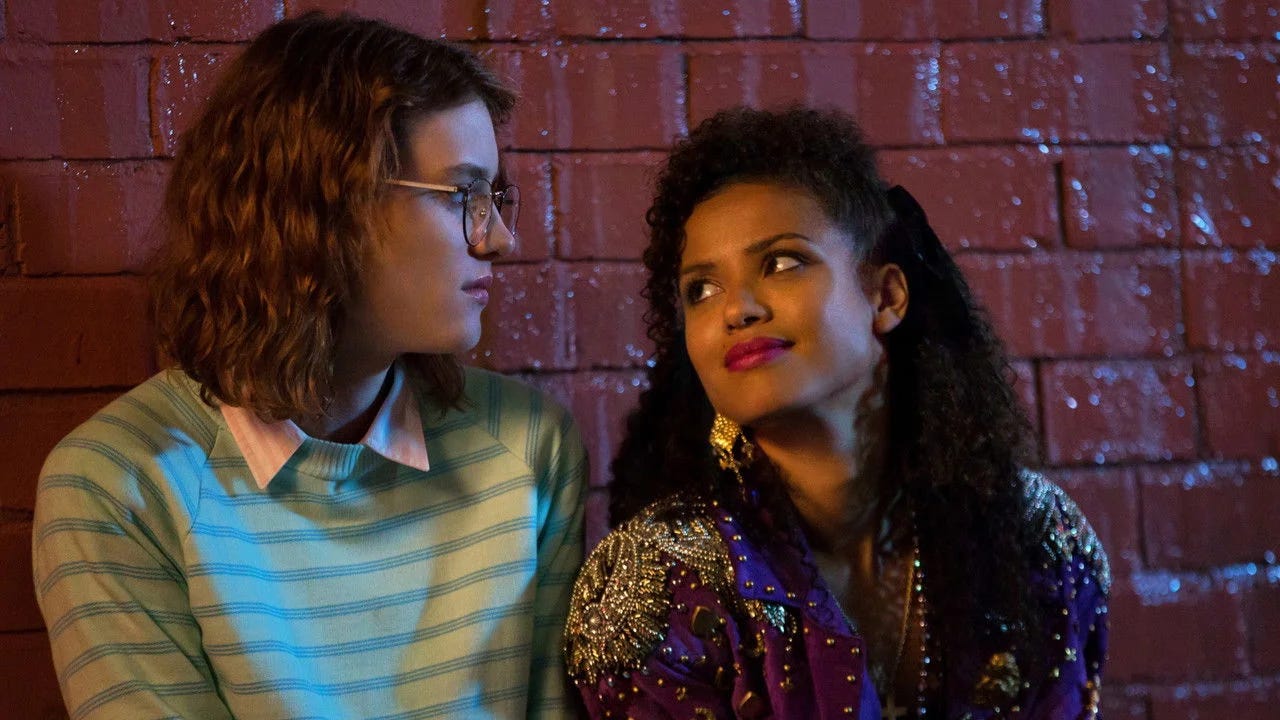
Yorkie and Kelly at Tucker’s. Black Mirror, S03E04.
We’re not in that timeline. Not yet. But I did the closest thing I could: I open-sourced the system I use to think. Not my consciousness, but the structure, the workflows, and the AI automation that turn my raw thoughts into something I can actually navigate. A template on GitHub that anyone can clone and start using today.
It’s not San Junipero. But it’s the best I can offer you in February 2026. Ask me again in 6 months.
Ideas are like fish
David Lynch, the filmmaker behind Twin Peaks (one of my favorite shows ever), Mulholland Drive, and some of the most unforgettable images in cinema, described how ideas work: “An idea comes and you see it and you hear it and you know it. It comes like on a TV in your mind.”
And then it’s gone.
You know the feeling. You’re in the shower, half-asleep, walking somewhere, and something clicks. A connection you hadn’t seen before. A sentence that lands exactly right. The shape of something you’ve been trying to articulate for weeks. For a few seconds you hold it. Clear, vivid, whole.
Then your phone buzzes. Someone asks you a question. You think “I’ll remember this later.”
You won’t.
Lynch compared it to fishing. Ideas are out there by the millions, but you can’t force them. All you can do is lower the bait and wait. When one bites, you see every detail. And one idea attracts the next. “I like to think of it as in the other room the puzzle is all together, but they keep flipping in just one piece at a time.” The first piece pulls in the rest. But it works both ways. Lose that first piece and the whole chain breaks. You don’t just lose one thought. You lose everything it would have attracted. The loss is invisible because you never find out what you missed.
Lynch said he forgot three incredible ideas in his life. I’ve lost hundreds. Maybe thousands. Not because I’m careless, but because I had no way to catch them in time.
The single most important thing you can do for your thinking is also the simplest: write the idea down before it leaves. Not in the right place. Not with the right tags. Just write it down. Anywhere. Now. Everything else is secondary to that first act of capture.
The graveyard of note-taking apps
I’ve tried everything. Notion, Evernote, Google Keep, and most recently, handwritten notebooks. Each one started the same way: enthusiasm, a week of careful organizing, then silence. Three months later, 300 notes I’d never read again and the quiet guilt of another abandoned system.
The pattern repeated because every tool asked the same impossible question upfront: where does this go?
I don’t know where it goes. I just had an idea in the shower and I need to write it down before it vanishes. Asking me to choose between “Work,” “Personal,” and “Ideas” while I’m still dripping wet is a guaranteed way to kill the thought.
I spent years thinking I was bad at note-taking. I wasn’t. I was fine at capturing. Terrible at organizing. And every system punished me for it by demanding structure before I knew what I was thinking. You can’t organize knowledge you haven’t processed yet. It’s like creating a playlist before hearing the songs.
Then Alberto showed me his brain
My friend Alberto Manzano had built something different. He showed me his second brain in Obsidian: a web of interconnected ideas. No folder hierarchy. No color-coded tags. Just ideas linked to other ideas, like a personal Wikipedia.
The method behind it is called Zettelkasten. One idea per note. No topic folders. Structure emerges from connections, not categories. You write the idea, link it to related ideas, and move on. Over time, clusters form on their own. You discover what you think about by watching which notes attract the most connections.
I took Alberto’s principles, built my own rituals around them, and adapted the whole thing for AI. For the first time, a note-taking system got more useful over time, not less. I had a second brain.
Why Obsidian
After years of fighting my tools, Obsidian did something radical: it got out of the way. No onboarding wizard, no subscription, no cloud sync I didn’t ask for. Just a folder of plain text files that I own. If Obsidian disappears tomorrow, I keep everything. Try exporting from Notion sometime. I dare you.
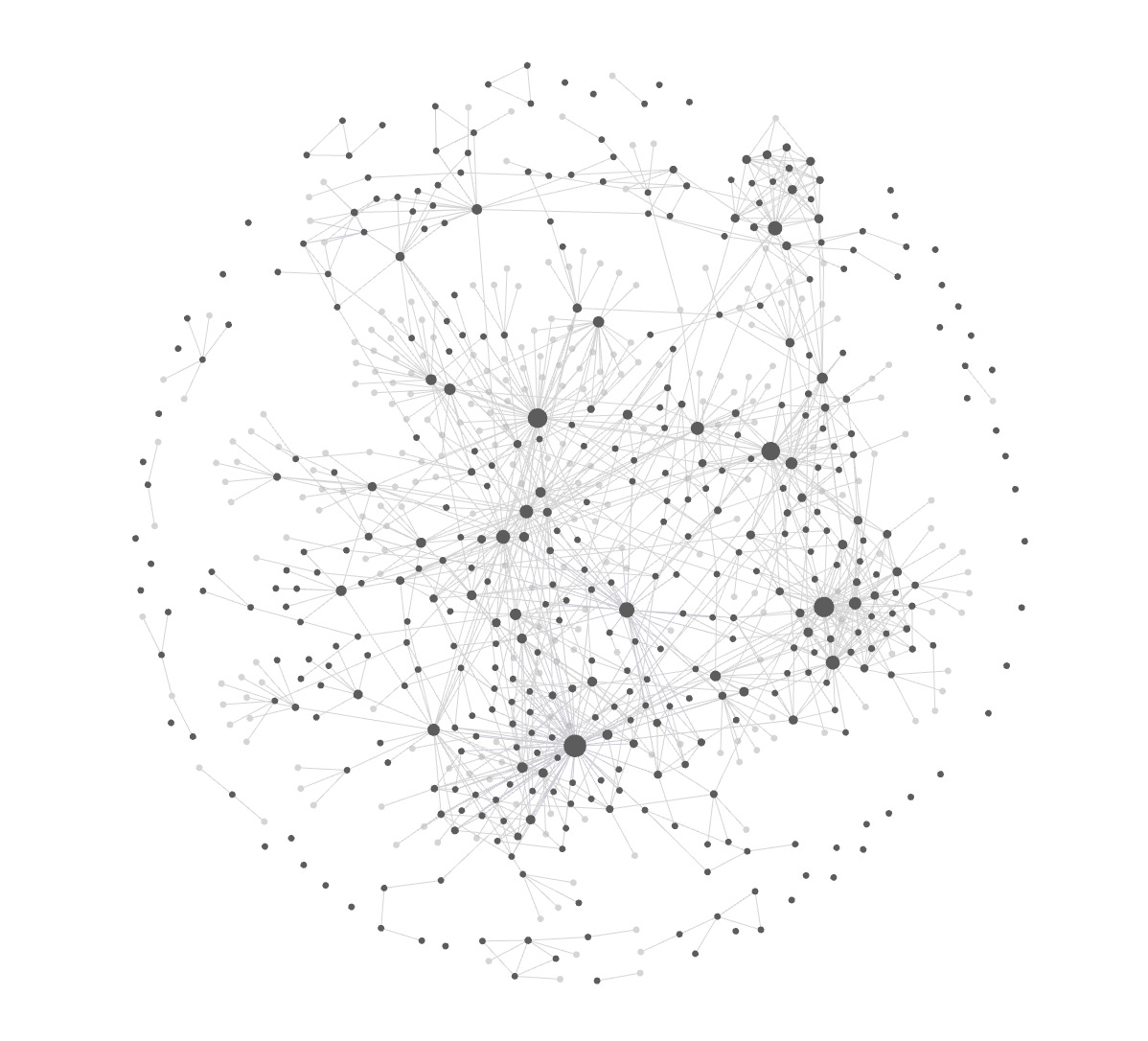
It has a graph view that turns your notes into a visual map. Dots for ideas, lines for connections. Lynch’s puzzle pieces, visible on screen. The more you write, the more structure reveals itself. You start seeing clusters you didn’t plan, patterns you didn’t notice while writing.
There’s also a plugin ecosystem that makes it feel like more than a text editor. Excalidraw lets you draw diagrams right inside your notes, and even those are stored as plain text. Dataview lets you query your notes like a database. But you don’t need any of that to start. The core is just you, a folder, and your ideas.
The part where AI walks in
Here’s where it gets interesting. And honestly, a little uncomfortable.
I use Claude Code as my thinking partner. Not to think for me. To handle everything I was already failing to do by hand.
When I have a raw idea, I just dump it. Could be something from a YouTube video, a person I met, three disconnected thoughts from a walk. I don’t decide where it goes. Claude reads it, figures out what it is, checks if I’ve already captured something similar, and files it in the right place with links to related notes. The organizing happens without me. That’s the core of it. The thing Lynch was describing. You catch the fragment, and the system makes sure it connects to the rest.
From there it spread to everything. My projects, my calendar, my goals. I didn’t plan it. My notes just became the place where I do my thinking.
The uncomfortable part
There’s a tension in using AI to manage your thinking. When Claude suggests a connection between two notes, is that my insight or its pattern matching? When it surfaces a theme in my weekly review, did I discover it or did the machine? If I turned it all off tomorrow, could I still think the way I think now?
I don’t have a clean answer. I chose to automate the parts I was already failing at. I wasn’t manually connecting notes. I wasn’t doing weekly reviews. I wasn’t processing my inbox. Those things weren’t happening. The choice wasn’t between “manual effort” and “AI automation.” It was between nothing and something. I chose something.
Clone my brain
I published the whole thing as a template on GitHub. Clone it, open in Obsidian, run the onboarding, start using it. The skills, the folder structure, the plugins, all pre-configured.
The hardest part of any knowledge system isn’t the philosophy. It’s the setup. If I can remove that barrier, maybe more people will experience what Lynch was talking about. You write one idea down. It connects to another. That connection sparks a third you never expected. The system doesn’t just store your thinking. It generates more of it.
Over time, your notes become a mirror. It shows you what you actually care about, not what you think you care about. The clusters that form, the notes that attract the most links, the patterns that surface when you review your week. That’s your real map.
Most people think note-taking is about remembering. It’s not. It’s about thinking. This system works for me. Not because it’s perfect, but because it removed every excuse I had for not using it.